
Yarns, Hooks, And Little Crochet Truths Behind My Book Covers
If you’ve ever opened one of my book cover patterns and thought, “Wait… macramé cord?”, you’re not alone.
This is probably the most common surprise message I get. People expect classic yarn, something soft and squishy, and instead they see cord and smaller hooks than the label would suggest.
Questions follow quickly:
- Can I use regular yarn instead?
- Why cord for a book cover?
- Will this feel too stiff?
- Do I really need that hook size?
So I’m answering all of that here, once, calmly, and honestly, based on what I actually use when I design and make my book covers, pouches, and sleeves.
You can bookmark this page, send it to your future self, or come back whenever yarn doubt strikes mid-project.
Why I use macramé cord for book covers
My book covers are not meant to behave like scarves or hats. They are closer to book clothing, structured, protective, and made to keep their shape.
Macramé cord gives me exactly what I need for that:
• structure that doesn’t collapse over time
• very little stretch, even with use
• crisp stitch definition for textures and patterns
• durability, especially at edges, flaps, and closures
Most of the cords I use are polyester or polypropylene blends. They are smooth, strong, and don’t fuzz or pill the way many yarns do. A book cover made from them keeps looking neat long after it’s been used, opened, closed, and tossed into bags.


“Can I use a different yarn instead?”
Yes, you can. But the result will not be the same, and that’s important to understand before you start.
When you replace macramé cord with regular yarn, a few things usually change:
• the fabric becomes softer and more flexible
• the cover may stretch over time
• textures may look less defined
• fit around the book can loosen
If you’re okay with a softer, more relaxed book cover, then experimenting is absolutely fine. Handmade work doesn’t have to be identical to mine to be valid.
If you want a snug, protective fit that holds its shape, I recommend sticking as close as possible to cord or very low-stretch yarns.
Good alternatives to look for:
• firm cotton cords • tightly twisted yarns with minimal elasticity • non-fuzzy fibers that show stitches clearly
Very soft acrylics, plush yarns, or elastic blends usually aren’t ideal for this type of project but if you are ready to choose cuteness over practicality, go for it!
Even I sometimes switch to something soft and cozy:


Covers made with Nr.10 cotton thread
Not all of my book covers are made with macramé cord. Some designs use Nr.10 cotton thread, and that usually raises a different kind of eyebrow.
Nr.10 cotton is fine, firm, and very precise. I use it when I want:
• delicate texture with very clean stitch definition
• lightweight covers that still feel intentional, not floppy
• decorative patterns where detail matters more than thickness
Because the thread is thin, the fabric is built through density, not bulk. Small hooks and tight stitches create a surprisingly strong surface that protects pages from everyday wear without adding weight.
If you’re considering substituting Nr.10 cotton with thicker yarn, the look and feel will change significantly. Thicker yarn will soften details and increase bulk. That’s not wrong, just different.


About lining (and why it’s sometimes optional)
Lining is not mandatory for every book cover, but it plays an important role in certain designs.
I add lining when:
• the stitch pattern is very open
• I want extra page protection
• hardware or closures need reinforcement
• the cover is meant to be used in bags or travel
Lining helps prevent page edges from catching and adds another layer of durability. It also stabilizes the fabric, especially in lighter or finer-thread projects.
That said, not every cover needs it. Dense cord-based designs often don’t require lining at all because the fabric itself does the job.
If a pattern includes lining instructions, it’s because the design benefits from it. If it doesn’t, you can always add lining as a personal choice, just keep in mind that it may slightly change the fit.


Why the hook size looks smaller than expected
This part often causes confusion, especially if you’re used to following yarn labels closely.
Yarn labels are written for general crochet projects. Book covers are not general projects.
I intentionally use smaller hook sizes because:
• they create a dense, stable fabric
• the cover keeps its shape around the book
• edges don’t flare or curl
• closures and flaps behave properly
A looser gauge might feel nicer while crocheting, but it often leads to a cover that stretches, shifts, or loses structure with use.
If your hands feel uncomfortable, you can size up slightly, but always check how the fabric behaves, not just how it feels in your hand.
Tools that matter more than you think
I don’t use a lot of tools, but the ones I use are chosen for precision, not convenience.

Crochet hooks
A wide range of hook sizes is essential when working with cord and threads. I regularly switch between sizes depending on the section of the project.
Closures and hardware
Magnetic snaps and strap hardware are part of the design, not an afterthought. They need a firm fabric to sit correctly, which is another reason cord works so well.

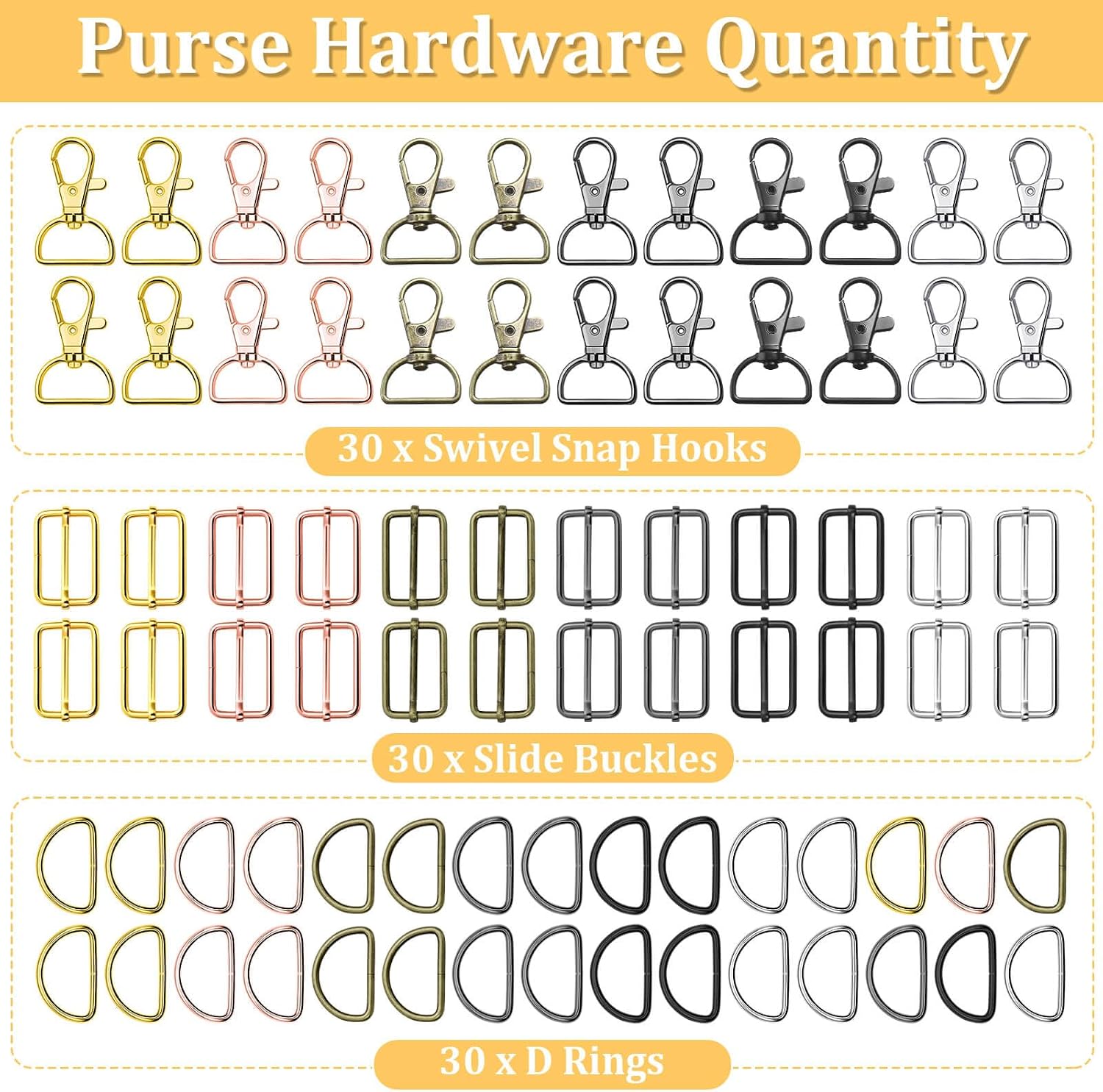
D-rings, clasps, and connectors
I use metal hardware when a design includes:
• wrist straps or short handles
• removable straps
• envelope-style flaps that need a secure closure
• decorative but functional accents
D-rings and clasps need a stable fabric to sit properly. This is another reason I often work with macramé cord. Softer yarns can stretch under hardware weight, causing pulling or distortion over time.
If you substitute yarn, always check that the fabric can support hardware without warping.
Measuring tools
Fit matters. A flexible measuring tape and gauge tool help check width and height as you go, not just at the end.

A realistic note about substitution
If you choose a different yarn, your book cover may:
• feel softer or thicker
• fit slightly differently
• look more relaxed than structured
That’s not a failure. It’s a design choice.
My patterns are written around the materials I use because they give predictable, durable results. Once you understand why those materials were chosen, you can decide how far you want to stray.
Still unsure?
If you’re standing in front of your yarn stash wondering if something will work, you can always message me with what you have. I’m happy to help you decide before you start.
This page exists so you don’t have to guess, second-guess, or feel like you’re doing something wrong.
Your books deserve covers that last, and you deserve a calm crochet experience.
Recommended products
-

Autumn Window Crochet Book Cover Pattern for Book Lovers – Cozy DIY Crochet Tutorial – Handmade Gift Idea for Readers & Crafters – Fall Book Sweater Design
€5,78 -

Reversible Crochet Book Cover Pattern PDF, Double Layer Interlock Crochet Book Sleeve Pattern, Adjustable Crochet Book Protector for Readers
€5,78 -

Crochet Book Cover Pattern – Burgundy Red with Leafy Cord and Floral Detail
€5,78 -

Crochet Book Cover Pattern with Lily of the Valley Decoration – Little Jane Clutch Purse – Envelope Style Design – Instant Download
€5,78
